
Adding Value
One of the most common questions asked of me and other conductors is:
"If the choir already knows the music, what exactly are you doing?"
It is a fair question.
After all, by the time a performance arrives, the notes have been learned. The rhythms are secure. The words are known. The choir has rehearsed, listened, refined, and repeated.
So what is left?
The answer, I would argue, is everything.
There is a misconception that the conductor's primary role is to keep the ensemble together.
To show the beat.
To coordinate entries.
To act as a human metronome.
There are certainly moments where these things matter. Complex passages require clarity. Difficult entries need confidence. Ensemble singing depends upon shared timing.
But if that is all the conductor brings to a performance, then their contribution is remarkably limited.
The reality is that by the time a choir reaches the concert platform, much of the conductor's work should already be complete.
The singers know what to do.
The technique has been established.
The musical decisions have been made.
The foundations are in place.
In many ways, the ultimate compliment to a conductor is that the choir could continue without them.
Not because they are unnecessary, but because they have prepared the ensemble so thoroughly that the music belongs to the singers.
And that is precisely where the conductor begins to add value.
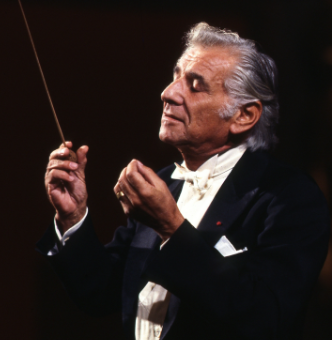
Performance is different from rehearsal.
The atmosphere changes.
The audience arrives.
The room feels different.
Adrenaline enters the equation.
What was secure in rehearsal can suddenly feel fragile. What felt expressive can become cautious.
The conductor's role shifts from teacher to communicator.
This is where gesture becomes critical.
Not gesture as beat patterns.
Not gesture as choreography.
Gesture as communication.
What does this phrase need?
More intensity?
More space?
More urgency?
More stillness?
A choir that has been trained to respond to gesture can be lifted beyond what was achieved in rehearsal.
A simple change in energy can transform a phrase.
A broader gesture can create space.
A smaller gesture can bring focus.
A moment of stillness can create tension.
A glance can inspire confidence.
The notes remain the same.
The performance does not.
This is why two performances of the same piece by the same choir can feel entirely different.
The music is not being recreated from scratch.
It is being reimagined in real time.
The conductor is not simply reminding singers what they already know.
They are shaping what is happening now.
Responding to the room.
Responding to the choir.
Responding to the moment.
For me, this is where conducting becomes most interesting.
Not in the rehearsal room, where problems are solved and decisions are made.
But in performance, where those decisions come alive.
The beat may keep everyone together.
But it is gesture that creates shape.
It is gesture that creates intention.
It is gesture that creates meaning.
The conductor's job is not merely to keep time.
It is to add value.
And when that happens, the performance becomes something more than the sum of its parts.
Peter Futcher
